

Florida HOA and condo association boards often assume workers compensation only applies if the association has employees. It doesn’t. Board members and volunteers routinely perform association duties — hanging signs, cleaning up common areas, helping at events, handling small maintenance tasks. If someone is injured doing that work and is treated as a worker, the association’s General Liability policy may not respond. GL excludes bodily injury to employees. An “If Any” Workers Compensation policy with Voluntary Compensation coverage is built for exactly this situation.
Quick Overview: HOA Workers Compensation
- Every Florida HOA and condo has WC exposure — even with zero employees
- “If Any” policy: written at zero payroll, minimum premium (~$539/year)
- Includes Voluntary Compensation endorsement for board members and volunteers
- First-dollar coverage — not excess of personal health insurance
- Also available for associations with employees (payroll-based)

Two Exposures Every Florida HOA and Condo Should Know
The first exposure involves the people who help the association without being on payroll.
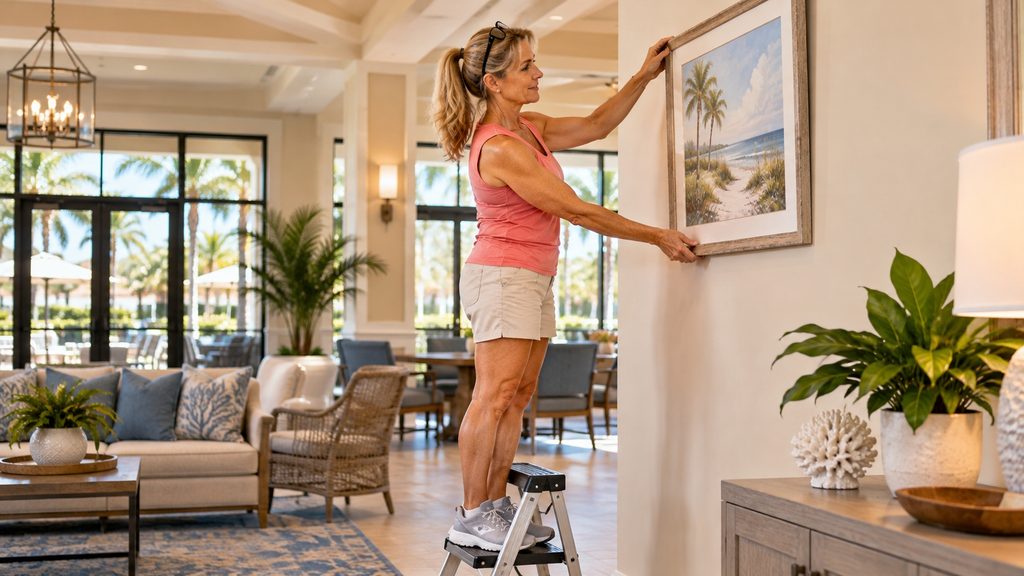
Imagine a board member hanging a picture in the clubhouse, a volunteer picking up storm debris, or a resident helping prepare for a community event. They may not think of themselves as employees, and the association certainly may not consider them employees.
But an injury can raise a different question: was that person performing work on behalf of the association? If the injured person is treated as a worker, the association can run into a coverage problem. General Liability is designed to cover many third-party bodily injury claims, but it excludes bodily injury to employees. That can leave the association trying to determine where coverage comes from after the injury has already happened.
The second exposure involves uninsured contractors. Florida associations frequently hire people or small contractors for maintenance, landscaping, repairs, cleanup, and other projects. If a contractor does not maintain required workers compensation coverage and one of its workers is injured while doing work for the association, the association may face responsibility for workers compensation benefits that otherwise should have been provided by the contractor.
Good vendor controls and certificates of insurance remain important, but they do not eliminate every possible problem. An appropriate workers compensation policy gives the association another layer of protection when these situations arise.
What Is an “If Any” Workers Compensation Policy?
An “If Any” workers compensation policy is designed for organizations that do not currently have regular W-2 employees but still have potential workers compensation exposure.
For a Florida HOA or condo association with no employees, the policy can be written using zero payroll and a minimum premium rather than calculating premium from an employee payroll.
The community association program available through Think Safe Insurance also includes a Voluntary Compensation endorsement. That endorsement is particularly important for associations because it can provide coverage for board members and volunteers who are injured while performing official duties for the association.
The coverage applies from the first dollar of a covered claim. It is not structured simply as excess coverage that requires an injured volunteer to use personal health insurance first. A volunteer may have excellent health insurance, limited health insurance, a high deductible plan, or no health insurance at all. An association should not have to build its risk-management plan around whatever personal medical coverage an individual volunteer happens to carry.
For many Florida HOAs and condos, the annual premium for this program runs approximately $539. Actual eligibility and final premium are confirmed for each association individually — but for most communities with no employees, the cost is well under $1,000 per year.
Why General Liability Is Not Enough
General Liability and Workers Compensation are designed to handle different types of injuries.
If a visitor slips and falls in a clubhouse, General Liability may be the policy you first think about. The situation changes when the injured person was performing work for the association.
General Liability policies contain exclusions for bodily injury to employees. If a board member, volunteer, maintenance worker, or other person is determined to have been acting as a worker when the injury occurred, the association cannot simply assume its General Liability policy will take care of the claim. That is the gap the “If Any” workers compensation policy is intended to address.
This does not mean every volunteer injury automatically becomes a workers compensation claim. It means Florida HOA and condo boards should recognize that volunteer activity creates a different exposure than an ordinary visitor injury.
The same principle applies when dealing with contractors. Requiring contractors to provide proof of insurance is a good practice, but an association can still face an unexpected problem if a contractor turns out to be uninsured when an injury occurs. Workers compensation coverage and good vendor-management practices work together — one should not replace the other.
Real Florida HOA Workers Comp Claims
Workers compensation claims involving community associations are not limited to traditional employees performing major maintenance jobs. Actual claims from the national community association workers compensation program illustrate how ordinary association activities can turn into significant injuries.
| What Happened | Claim Paid |
|---|---|
| Board member fell hanging a picture in a common area — broken ribs and punctured lung | $252,931 |
| Fell off a stool — broken right hip | $257,705 |
| Maintenance worker tripped over a wire — broke hip | $91,836 |
| Volunteer shoveling gravel — back strain | $61,245 |
None of these involve unusual industrial operations. They involve the types of work and activities that happen around residential communities every day. For an HOA or condo board, the takeaway is not that volunteering should stop — volunteers are often an important part of how communities operate. The goal is to make sure the association has considered how an injury would be handled before one occurs.
For Associations With Employees
If your Florida HOA or condo association has employees, the insurance structure is different. Rather than an “If Any” policy based on zero payroll, the association generally needs a standard workers compensation policy based on its employees, job classifications, and payroll. That might apply to an association employing maintenance staff, administrative employees, property-management personnel, or security staff.
Think Safe Insurance can help determine which type of workers compensation policy fits the association’s actual staffing structure. The important part is making sure the policy matches how the community operates rather than assuming one solution fits every association.
How Think Safe Insurance Helps Florida Community Associations

Think Safe Insurance is an independent insurance agency based in Brandon, Florida, serving HOA associations, condo associations, and community associations throughout the state.
We work with a national workers compensation program designed specifically for community associations. For associations with no employees, that allows us to offer an “If Any” policy with Voluntary Compensation coverage for board members and volunteers performing association duties.
Workers compensation is only one part of a complete association insurance program. Florida HOA and condo boards should also review their D&O / Directors and Officers coverage, crime and fidelity bond, and general liability to make sure the full picture is covered.
If your board has volunteers, hires contractors, or has people performing work on behalf of the association, it is worth reviewing.
Call us at 813-425-1626 or request a quote online to get started.
Frequently Asked Questions About HOA Workers Compensation in Florida
Does a Florida HOA need workers compensation insurance if it has no employees?
Yes. An HOA with no regular employees can still have workers compensation exposure. Board members, volunteers, or uninsured contractor employees may create situations where workers compensation coverage becomes important even though the association has no payroll. An “If Any” policy addresses this without requiring W-2 employees.
What is “If Any” workers compensation insurance?
An “If Any” policy is a workers compensation policy written for organizations with no current W-2 employees. For an eligible Florida HOA or condo, it can be written with zero payroll at a minimum annual premium, providing workers compensation protection for potential exposures including volunteer injuries and uninsured contractor situations.
Does the policy cover HOA board members and volunteers?
The community association program available through Think Safe Insurance includes a Voluntary Compensation endorsement designed to cover board members and volunteers while they are performing official association duties. Coverage is subject to policy terms and eligibility requirements.
Does a volunteer have to use their personal health insurance first?
No. The Voluntary Compensation coverage in this program provides first-dollar coverage for covered volunteer injuries rather than operating only after the volunteer’s personal health insurance has been used. This is an important distinction from some other coverage arrangements.
How much does an HOA “If Any” workers compensation policy cost in Florida?
The current program premium is approximately $539 per year for an eligible association without employees. Final pricing and eligibility are confirmed for each individual association. For most Florida communities with no payroll, the annual cost is well under $1,000.
What happens if an uninsured contractor’s employee gets hurt on association property?
An uninsured contractor can create workers compensation exposure for the association if one of the contractor’s workers is injured while performing work for the community. This is one reason associations should both verify contractor insurance and maintain their own workers compensation protection. Always collect certificates of insurance before work begins.
Is General Liability enough to cover injured volunteers?
Not necessarily. General Liability policies exclude bodily injury to employees. If an injured volunteer or board member is treated as a worker at the time of the injury, a coverage gap can arise. An “If Any” workers compensation policy with a Voluntary Compensation endorsement is designed to address that gap directly.
What if our HOA or condo association has employees?
Associations with employees generally need standard workers compensation coverage rather than a zero-payroll “If Any” policy. Premium is typically based on payroll, employee classifications, and the association’s operations. Think Safe Insurance can help determine the right structure based on how your association is staffed.



Reviewed by Greg Martin
Licensed Florida Insurance Agent, License #P036341
Greg Martin has over 18 years of experience helping Florida families understand and protect their homes, vehicles, and other assets through homeowners, auto, flood, and specialty insurance. He is the owner of Think Safe Insurance, an independent Florida insurance agency.
Last Reviewed: October 2026